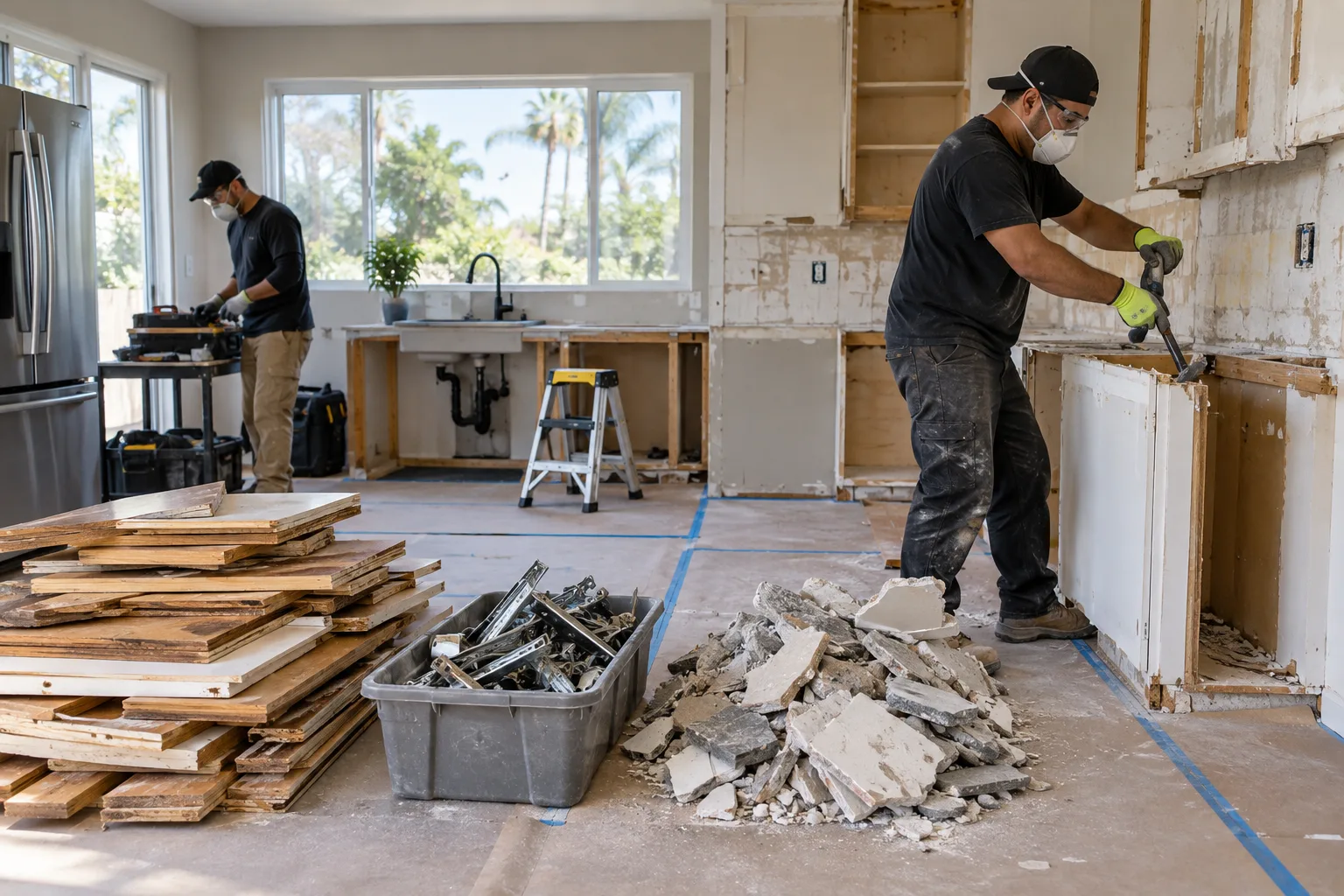
Sorting can improve loading, clarify disposal options, and keep recyclable materials out of a mixed pile. It only helps when the material is safe to identify and move. Suspect asbestos, lead-contaminated debris, fluorescent lamps, batteries, chemicals, or unknown dust should not be disturbed for the sake of neatness.
A useful separation plan
| Material | Keep separate when practical | Watch for |
|---|---|---|
| Clean lumber | Stack flat and remove loose protruding fasteners where this can be done safely. | Paint, chemical treatment, rot, nails, and mixed roofing material. |
| Metal | Keep framing, pipe, fixtures, and hardware in a stable container. | Sharp edges, pressurized lines, and attached electrical parts. |
| Concrete and masonry | Discuss weight and load limits before moving it. | Small volume can still be extremely heavy; do not assume truck volume is the only price factor. |
| Drywall | Keep dry and separate from ordinary household junk. | Unknown coatings, mold, and suspect material in older construction. |
| Cardboard and packaging | Flatten clean, dry boxes. | Wet, oily, painted, or foam-contaminated packaging. |
| Fixtures and cabinets | Set reusable pieces aside before demolition begins. | Connected plumbing, wiring, gas, glass, and heavy stone tops. |
California treats diversion as part of the project
CalRecycle identifies lumber, drywall, metals, masonry, carpet, plastic, pipe, cardboard, and green waste as common construction and demolition materials that may be reusable or recyclable. Its guidance also warns that universal wastes such as fluorescent lamps, mercury-containing devices, and batteries generally do not belong in solid-waste landfills. Review CalRecycle’s C&D recycling guidance.
For permitted projects, do not treat a hauling plan as a substitute for the project’s required diversion documentation. CalRecycle says CALGreen applies minimum diversion requirements to covered new construction, demolition, additions, and alterations. Your building department or project professional should confirm what applies to the permit. See CalRecycle’s CALGreen diversion overview.
Questions to ask the removal provider
- Should concrete or soil travel in a separate heavy-material load?
- Which materials must stay dry?
- Are nails and sharp edges contained well enough for safe handling?
- Who is responsible for permit-related weight tickets or diversion records?
- What materials are excluded from the load?
- Have utilities been disconnected by qualified professionals?
For a known, nonhazardous project, review construction debris removal. For teardown plus haul-away, start with light demolition and describe the entire scope.
Source check: CalRecycle construction and demolition recycling and diversion guidance, reviewed October 9, 2026. State guidance applies in California; permit and documentation requirements must be confirmed with the local jurisdiction for the specific project.