
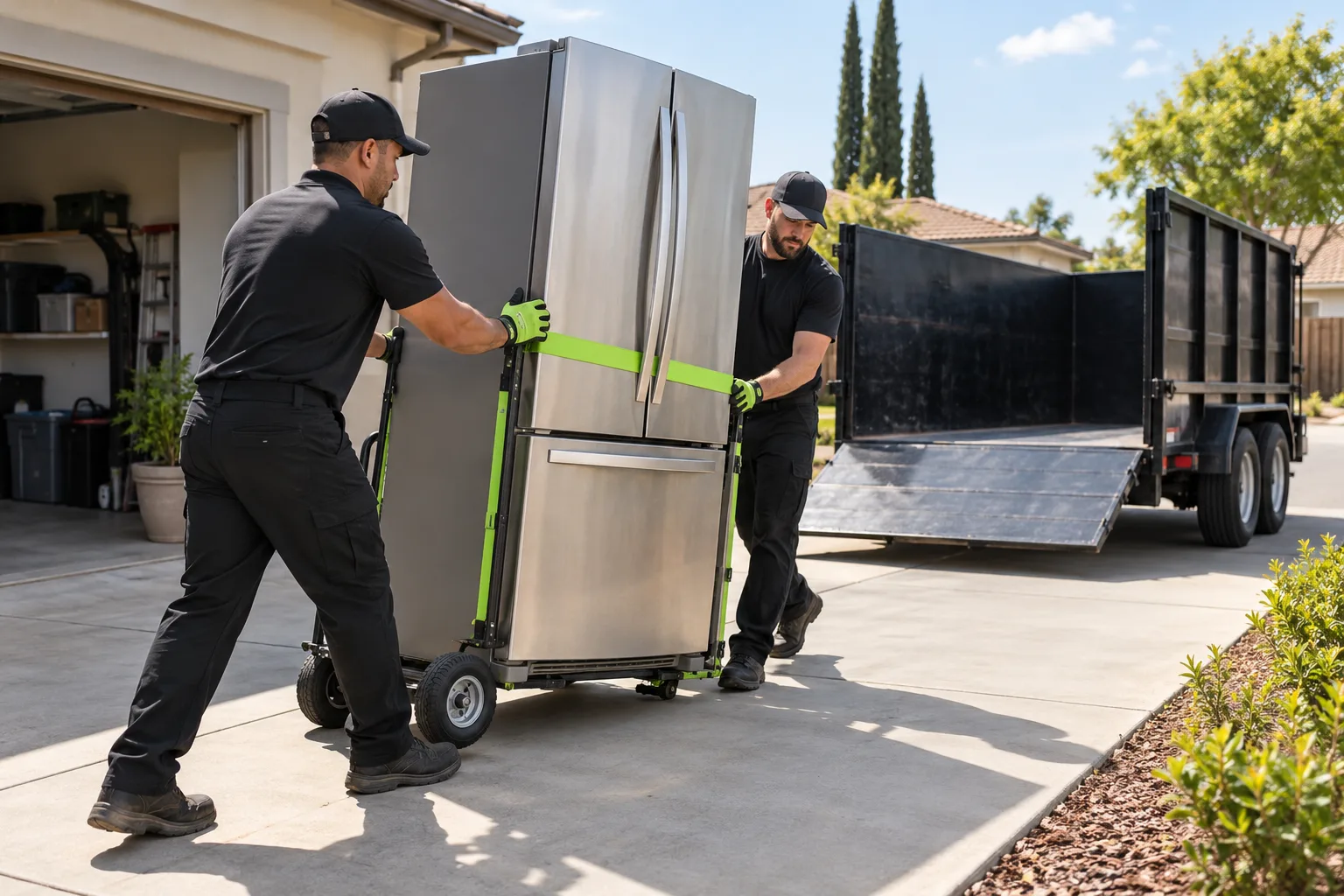
A refrigerator is heavy, top-heavy, and likely to contain refrigerant and oil. Preparation should make the item clean and reachable; it should not turn into customer-led appliance dismantling.
48-to-24 hours before removal
- Move food to another refrigerator or cooler.
- Follow the manufacturer’s instructions for unplugging and defrosting.
- Place towels or a shallow tray where meltwater may collect.
- Empty and clean removable bins and shelves. Pack glass shelves separately if the provider requests it.
- If there is a water line, arrange safe disconnection. Do not force valves or fittings.
On pickup day
- Confirm that the interior is dry and no food remains.
- Measure the refrigerator, doorways, gates, and stair turns.
- Remove loose mats, decorations, and vehicles from the route.
- Tell the crew whether doors or railings must be removed. Do not make that change without agreement.
- Keep children and pets away from the work path.
Who handles what?
| Task | Customer can prepare | Needs confirmation or a qualified person |
|---|---|---|
| Food and shelves | Empty, clean, dry, and secure loose parts. | None, unless the manufacturer gives special instructions. |
| Electrical connection | Unplug an ordinary accessible cord after following the manual. | Hardwired units need an appropriate professional. |
| Water or ice line | Know where the shutoff is and clear access. | Arrange safe disconnection if the fitting is not straightforward. |
| Refrigerant system | Leave the sealed system intact. | Refrigerant recovery and appliance disposal must follow applicable requirements. |
| Moving | Clear the route. | Use trained help and appropriate appliance-moving equipment. |
Why the cooling system stays intact
EPA provides homeowners with specific resources on the safe disposal of refrigeration and air-conditioning equipment under Section 608. Cutting tubing or venting refrigerant is not part of normal pickup preparation. Keep the unit intact and ask the removal provider where it will go. Review EPA’s homeowner refrigeration guidance.
When the route is measured and the unit is ready, call about refrigerator removal. Include the refrigerator type, approximate dimensions, floor level, stairs, water-line status, and whether another appliance is also going.
Source check: U.S. Environmental Protection Agency Section 608 homeowner refrigeration resources, reviewed October 9, 2026. Federal refrigerant rules apply across the United States; appliance acceptance and local disposal programs still vary.