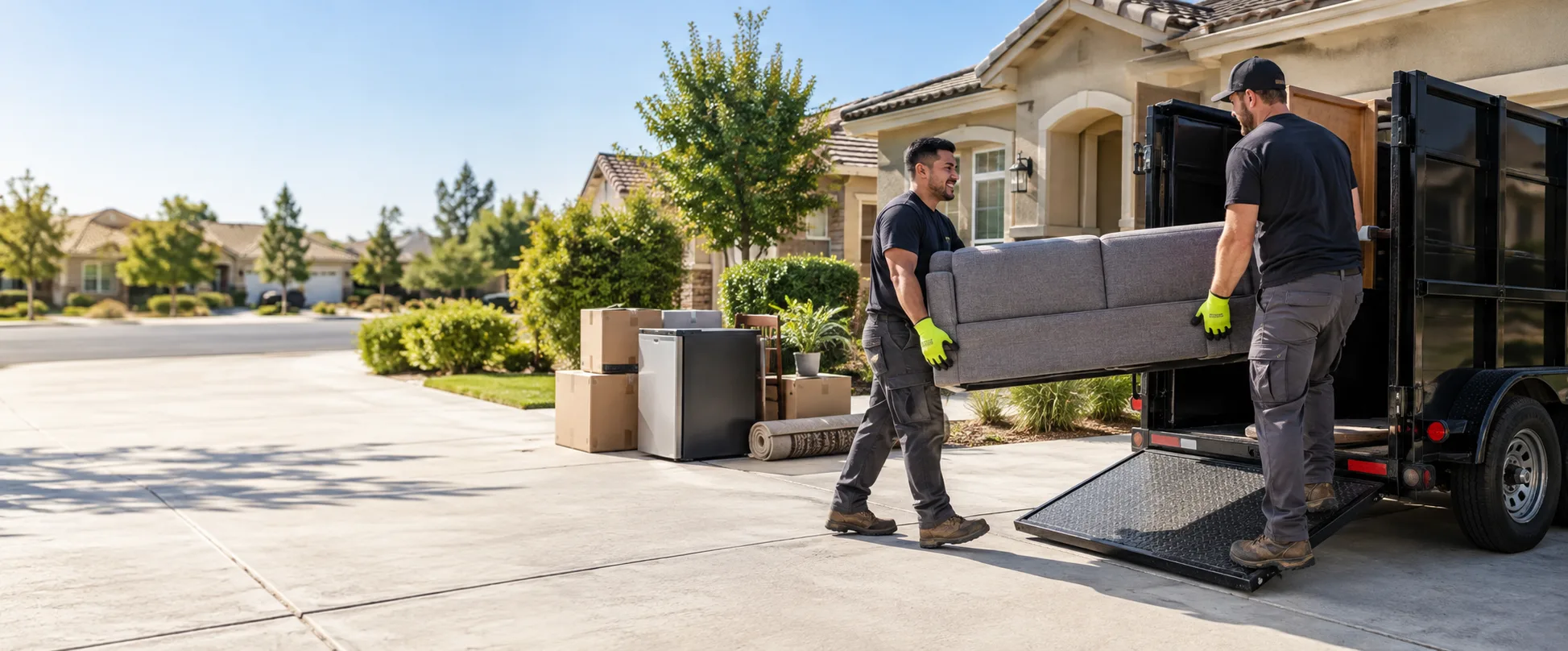
You do not need to drag everything to the curb before a full-service pickup. You do need to make the decision boundary obvious: this goes, that stays, and these few items need a question answered first.
Use this 20-minute item and access check
- Walk each room and put small loose items into sturdy boxes or bags.
- Place painter’s tape on large removal items. Use a different color for anything that must stay.
- Take one wide photo of each room or outdoor area, then close photos of unusually heavy or damaged items.
- Trace the route from the item to the loading area. Note stairs, elevators, low branches, narrow gates, soft ground, and long carries.
- Move pets, children’s items, cords, loose rugs, and parked vehicles away from the work path.
Sort by handling need, not by room
| Group | Examples | What to do |
|---|---|---|
| Ordinary household items | Furniture, boxed goods, rugs, shelving | Mark clearly and keep the route open. |
| Data-bearing items | Computers, phones, hard drives | Back up and erase personal data before pickup. |
| Regulated or special items | Televisions, batteries, refrigerators, tires | List each item when you call; do not hide it inside a box. |
| Hazardous or excluded | Fuel, wet paint, pesticides, chemicals, biohazards | Keep separate and ask the responsible local authority for disposal guidance. |
| Uncertain | Damaged equipment, sealed drums, suspect building debris | Do not open or disturb it. Send a photo and description first. |
Do not create a lifting injury while “helping”
Leave awkward or heavy items in place unless the provider specifically asks you to move them. OSHA’s materials-handling guidance says mechanical means should be used where possible for heavy, bulky objects, and workers should get help when a load cannot be safely grasped or seen around. That workplace guidance is a useful warning for homeowners too: a narrow staircase is not the place to test whether a sofa is manageable. Review OSHA’s materials-handling introduction.
Questions to answer before booking
- Is the removal pile final, or are you still deciding?
- Is everything on the same floor?
- Can the trailer park close to the exit?
- Does the building require elevator reservations or proof of insurance?
- Are any items wet, infested, sharp, broken, or connected to utilities?
- Is there a hard deadline tied to moving, closing, or contractor work?
If you have completed the checklist, the next step is simple: call with the photos and access notes, or review the junk removal service and volume pricing guide.
Source check: OSHA material-handling guidance, reviewed October 9, 2026. The safety source is United States workplace guidance; it is cited here for general risk awareness, not as a substitute for job-specific professional assessment.